Theo Krause · 2 October 2026
Marine Ecosystem Interactions with Modern Waterfront Illumination Technologies
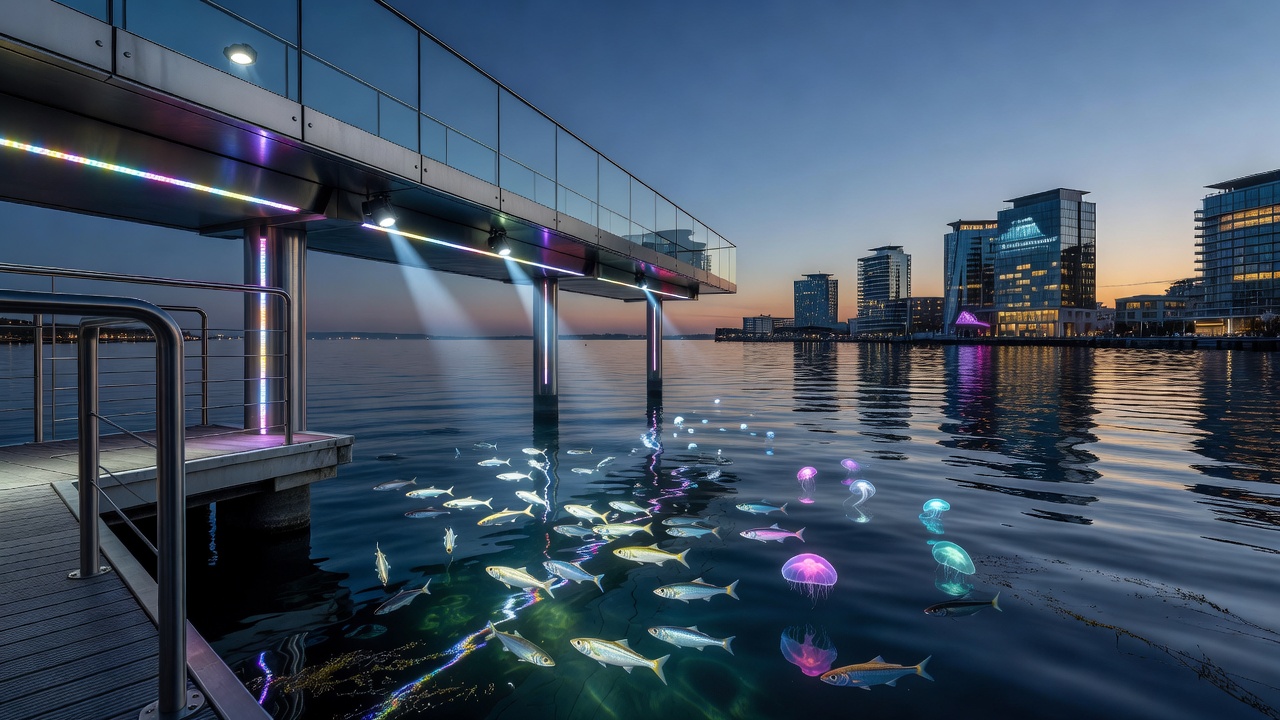
Modern waterfront illumination technologies have expanded rapidly in coastal zones where cities and ports deploy high-efficiency LED arrays, motion-activated fixtures, and tunable spectrum lights to improve safety and reduce energy costs. These systems interact directly with marine ecosystems because artificial light reaches the water surface and penetrates the upper layers where many organisms live and feed. Research from coastal monitoring programs shows that light intensity and wavelength determine how strongly different species respond, with shorter blue wavelengths often traveling deeper into the water column than warmer tones.
Light Penetration and Primary Producers
Phytoplankton communities experience altered photosynthesis cycles when waterfront lights remain active through the night, and field measurements collected in several temperate estuaries indicate shifts in chlorophyll production during prolonged illumination periods. Zooplankton that migrate vertically each day encounter barriers because bright piers and boardwalks create zones of constant light that disrupt their normal ascent and descent patterns. Data collected by marine research vessels reveal that some copepod populations avoid illuminated areas entirely, which then affects the feeding success of larval fish that rely on them as prey.
Species-Specific Responses in Coastal Waters
Sea turtle hatchlings oriented toward artificial lights instead of the natural horizon have been documented at multiple nesting beaches, and conservation groups now coordinate with port authorities to dim or redirect fixtures during peak hatching months. Fish species that hunt at night, such as certain snappers and groupers, show increased activity under white LED piers while others retreat to darker patches between fixtures. Bioluminescent organisms including dinoflagellates and comb jellies reduce their own light production in areas where background illumination exceeds natural moonlight levels, according to laboratory experiments that simulate waterfront conditions.
Technological Advances and Monitoring Efforts
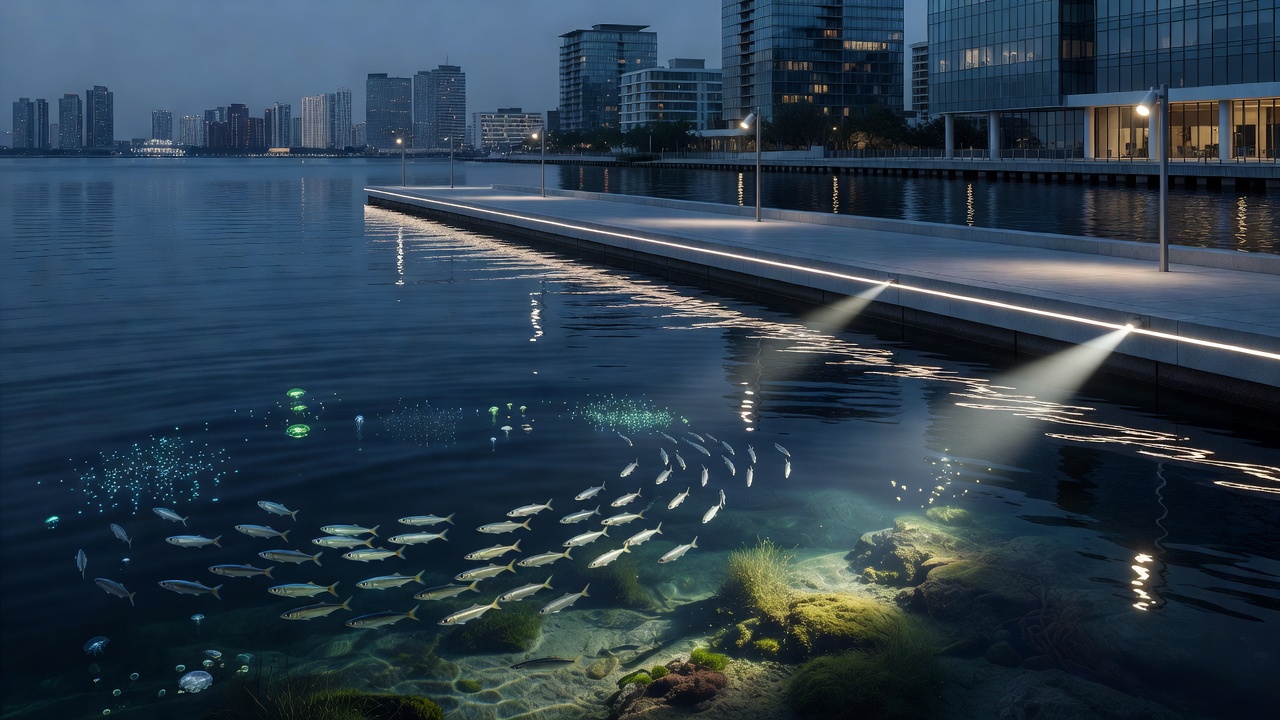
Newer lighting designs incorporate narrow-band spectra and automatic dimming schedules that lower overall output after midnight. Sensor networks installed along several North American and Australian harbors track real-time light levels at different depths, providing datasets that help planners adjust fixture angles and intensity. A collaborative project launched in October 2026 between European marine institutes and Canadian port operators began testing underwater light barriers designed to contain illumination within surface layers while leaving deeper habitats darker. These systems use baffles and selective wavelength filters to limit the spread of light that reaches sensitive benthic communities.
Regulatory Frameworks Across Regions
Coastal management agencies in the United States, through NOAA coastal programs, have issued guidance recommending reduced lighting near known spawning grounds, while similar recommendations appear in Australian state environmental plans that require spectral tuning on new waterfront projects. European Union directives on marine environmental quality now include artificial light as a pressure factor that member states must address in their marine spatial plans. Industry groups representing port operators have begun sharing best-practice documents that outline fixture placement strategies shown to decrease light trespass into adjacent waters.
Case Examples from Active Ports
One harbor in the Pacific Northwest replaced older sodium lamps with amber LEDs along a major shipping terminal, and subsequent surveys recorded higher densities of juvenile salmon moving through the area during nighttime hours compared with previous seasons. In the Mediterranean, researchers tracking loggerhead turtles near an upgraded marina noted fewer disorientation events after the installation of shielded bollard lights that direct beams downward rather than outward across the water. These localized improvements demonstrate that targeted changes in lighting hardware can produce measurable differences in animal behavior without compromising operational needs.
Conclusion
Interactions between modern waterfront illumination and marine ecosystems continue to receive attention from scientists, port authorities, and regulatory bodies because lighting technologies evolve quickly while long-term ecological data accumulate gradually. Ongoing sensor deployments and coordinated monitoring programs supply the quantitative information needed to refine lighting designs that balance human requirements with habitat protection. As more regions adopt spectrum-specific fixtures and timed dimming protocols, the cumulative effects on plankton, fish, and reptiles should become clearer through continued observation and cross-regional data sharing.