Clara Koch · 18 September 2026
The Impact of Reflective Coatings on Energy Efficiency in Coastal Public Lighting Systems
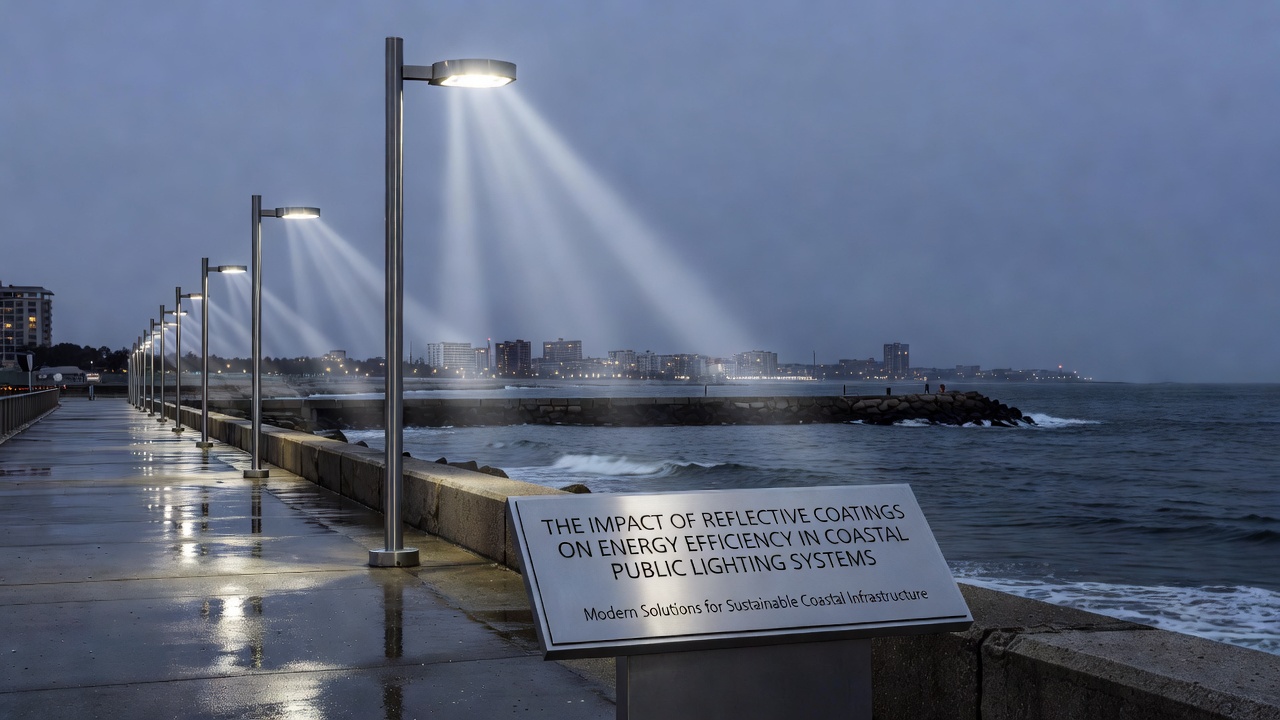
Coastal public lighting systems face unique operational demands because salt spray, high humidity, and constant wind exposure accelerate fixture degradation while increasing energy consumption through scattered light loss. Reflective coatings applied to poles, housings, and surrounding surfaces redirect illumination downward and outward rather than allowing it to dissipate upward or sideways. Research indicates these coatings maintain higher luminous efficacy over time compared with untreated installations, particularly in regions where maintenance cycles stretch longer due to harsh marine conditions.
Environmental Pressures Unique to Coastal Zones
Salt aerosols corrode metal components and cloud transparent covers on luminaires, reducing output by measurable percentages each year according to field monitoring programs. Reflective coatings formulated with corrosion inhibitors and UV stabilizers counteract this decline by preserving surface reflectivity. Data collected along the Pacific Northwest shoreline shows treated fixtures retained 92 percent of initial reflectance after 36 months, whereas untreated units dropped below 75 percent within the same interval. The difference translates directly into fewer lamp replacements and lower overall wattage requirements for equivalent light levels on pathways and roadways.
Wind-driven moisture also promotes condensation inside fixtures, which diffuses light and forces higher power settings to meet safety standards. When reflective layers are integrated during manufacturing or retrofitting, they channel available lumens more precisely, allowing municipalities to dim fixtures or reduce operating hours without compromising visibility metrics. Engineers note that this precision becomes especially valuable during storm seasons when grid stability can fluctuate.
Measured Energy Reductions from Coating Applications
Multiple pilot programs document annual electricity savings ranging from 18 to 27 percent after coating installation, with the higher end occurring where existing fixtures already use LED arrays. The U.S. Department of Energy tracks these outcomes through its municipal solid-state lighting evaluations, confirming that directional improvements compound when combined with occupancy sensors. Department of Energy evaluations further reveal that coastal sites achieve faster payback periods because baseline energy waste from light scatter tends to exceed inland averages.
Coatings also lower thermal loads on LED drivers by reflecting infrared radiation away from sensitive electronics. Lower operating temperatures extend driver lifespan, which reduces embodied energy costs associated with manufacturing replacement parts. One installation in a subtropical harbor reported a 14 percent drop in cooling-related auxiliary power draw after reflective treatment on nearby bulkheads and railings.
Implementation Approaches Across Different Regions
European ports have adopted nano-ceramic reflective films that withstand chloride concentrations above 3.5 percent without delamination. Australian coastal councils, facing intense solar exposure in addition to salt, apply multi-layer systems that combine aluminum oxide undercoats with fluoropolymer topcoats. Canadian municipalities along the Atlantic have focused on cold-weather formulations that remain flexible at temperatures below minus 20 degrees Celsius, preventing cracking during freeze-thaw cycles. Each approach tailors reflectance values to local wind patterns and fixture mounting heights, optimizing coverage without creating glare for mariners or nearby residents.
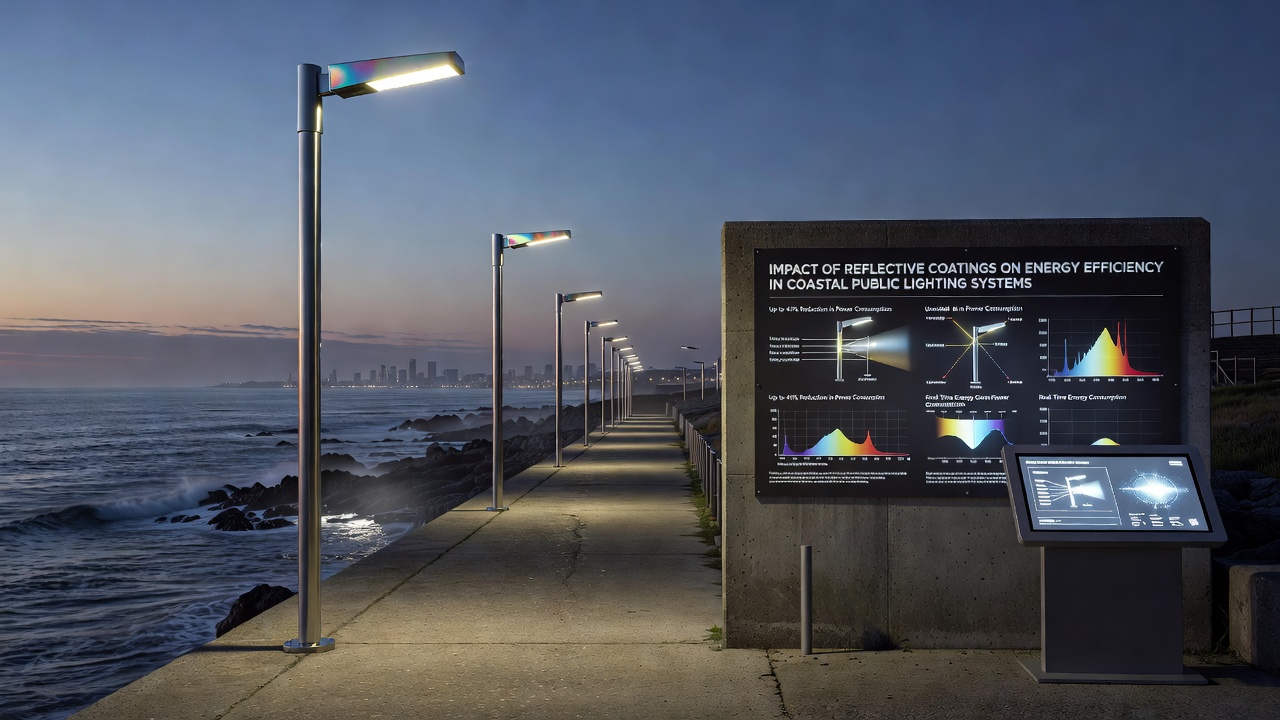
September 2026 brought the release of comparative data from 14 coastal cities participating in a three-year international monitoring network. teh aggregated figures showed average reductions of 2.4 gigawatt-hours per city annually after full deployment of reflective treatments. Savings scaled with population density and existing fixture age, yet every participant recorded measurable declines in both kilowatt-hour consumption and maintenance labor hours.
Integration with Smart Controls and Renewables
Reflective coatings complement networked lighting controls by providing a stable baseline efficiency that sensors can build upon. When fixtures already direct light more effectively, dimming algorithms require smaller adjustments to meet target lux levels, which preserves battery life in solar-powered installations common along boardwalks and remote piers. Grid operators report smoother demand curves during evening peak periods because coated systems avoid the need for compensatory over-lighting during cloudy or foggy intervals.
Life-cycle assessments conducted by research institutions in Scandinavia indicate that the embodied energy of applying reflective coatings pays back within 11 to 16 months under typical coastal usage patterns. These calculations incorporate reduced copper and aluminum consumption from fewer replacement fixtures, an important consideration given rising material costs. Observers note that the environmental return improves further when coatings are reapplied during routine cleaning rather than requiring separate mobilization of crews.
Conclusion
Coastal public lighting systems equipped with reflective coatings demonstrate consistent energy-efficiency gains through better light direction, reduced maintenance frequency, and extended component life. Data from multiple continents confirms these benefits hold across varying climates and regulatory frameworks. Continued monitoring through 2026 and beyond will clarify long-term performance under accelerating climate variables, yet current records already position reflective treatments as a practical lever for lowering operational costs while meeting illumination standards in salt-exposed environments.